
The Evolution of Korean Clothing Through the Centuries
How does fashion give us any insight into the history of a certain country? Korean clothing has experienced an outstanding transition throughout the centuries. Every garment has its story, starting with the fancy Hanbok that is to be put on during royal ceremonies to the high-tech clothing that is ruling the fashion markets of Seoul even nowadays. The knowledge about this development provides travelers and culture-lovers with a more empirical insight into the Korean society.
Korean style is not only about the shifting fashion. It reflects political revolutions and cultural interactions and the quest of Korea to strike a balance between modernity and tradition. This journey on fabric and fashion shows us the way Koreans have preserved their identity but accept the world impact.
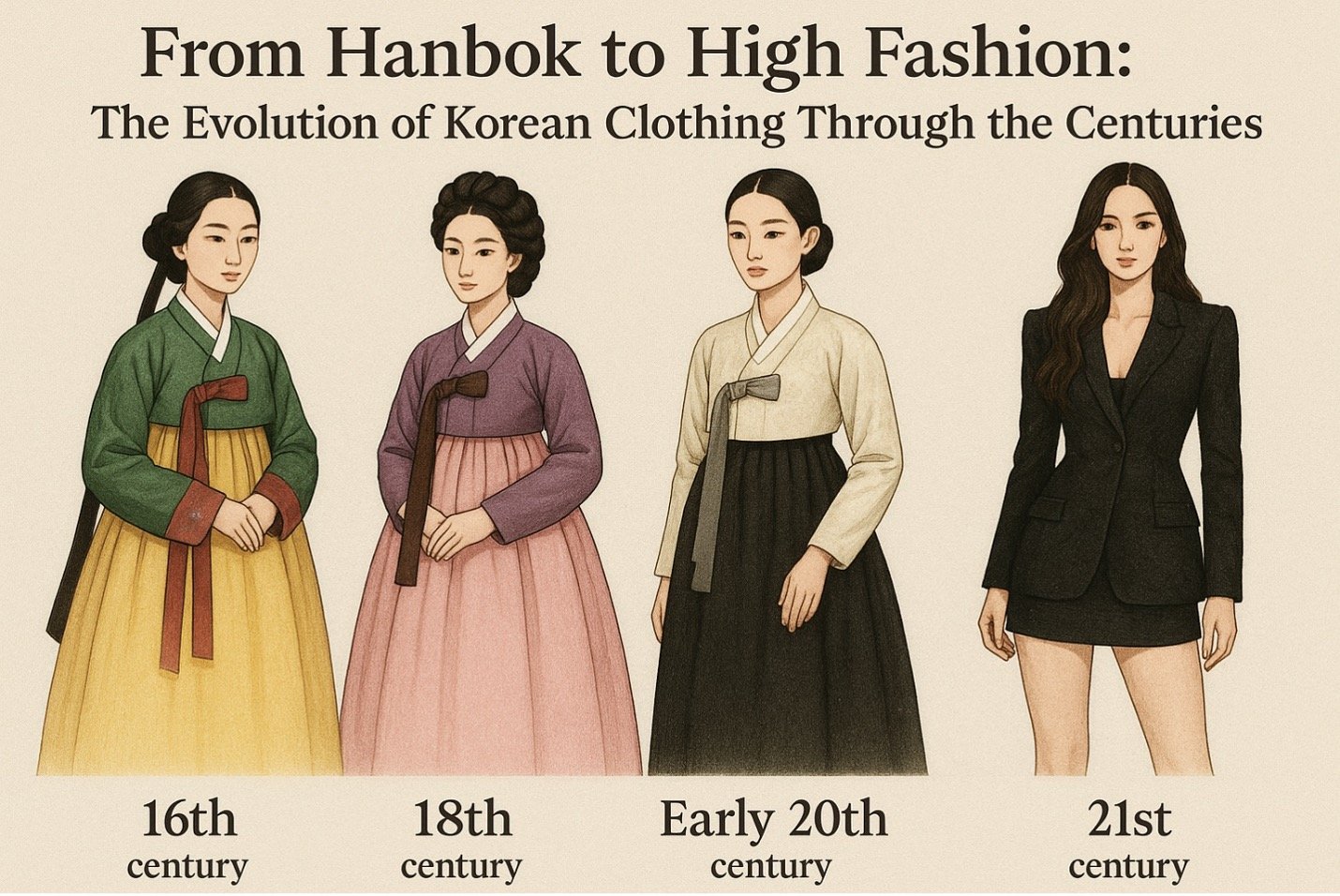
The Hanbok: Foundation of Korean Clothing Identity
Origins in Ancient Korea
Korean traditional clothing was developed in thousands of years. Hanbok developed in the times of the Three Kingdoms (57 BCE - 668 CE). All the three kingdoms, Goguryeo, Baekje, and Silla, came up with their own style. Nonetheless, they also possessed similar aspects that characterized the Korean dress.
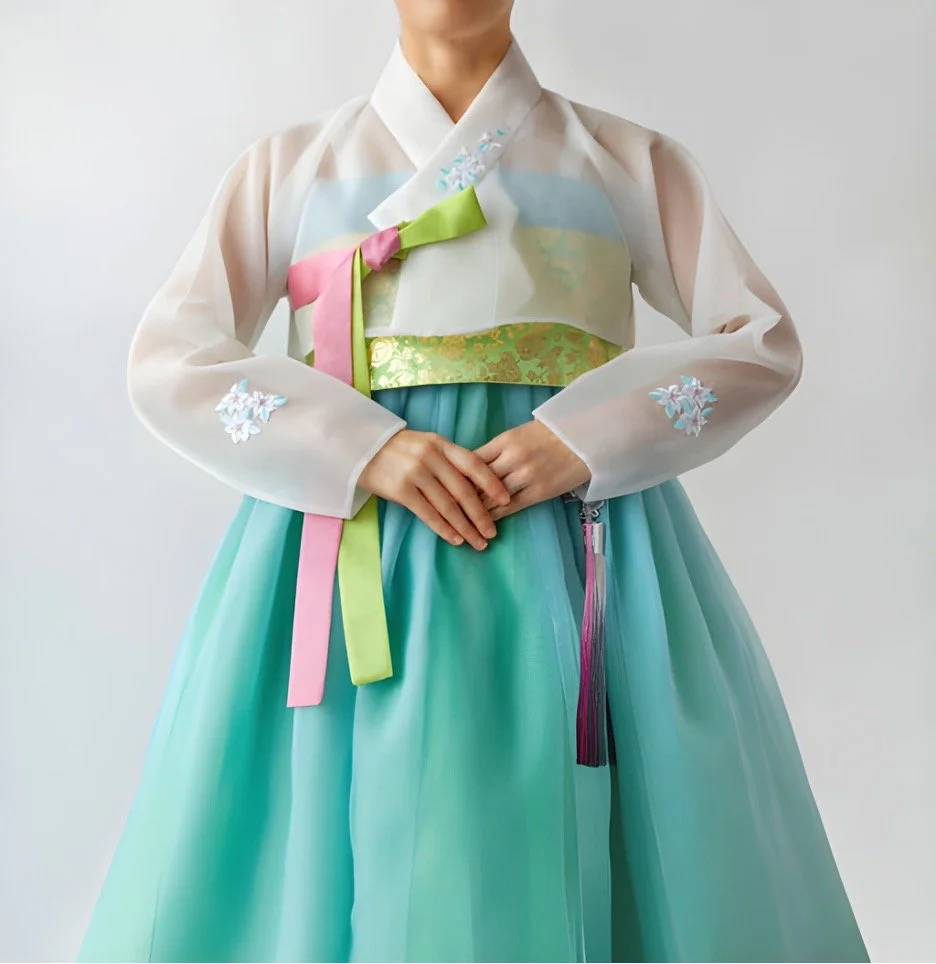
The general design of the hanbok did not change in centuries. The ladies wore jeogori (jacket) and chima (skirt). Men put on jeogori with baji (trousers). These minimal elements formed a refined shape that was associated with Korean identity.
The Joseon Dynasty's Lasting Influence
Hanbok was brought to perfection under the Joseon Dynasty (1392-1910). It is at this time that Korean clothing attained its most elegant form. Colors were considered as social status. Royalty and aristocrats had bright colors. White or dull colors were mostly used by commoners but Joseon permitted other colors later, especially chima of women in light pinks and greens. Bright yellow and dragon motives were strictly royal.
Thus, a single look at the clothing of a person indicated his status in the society. Ceremonial hanbok were characterized by extensive embroidery and expensive material. Everyday clothing was simpler but sophisticated. The difference between formal and casual clothes is also what prevails in Korean fashion to this day.
Colonial Disruption and Western Influence
The Forced Transformation Period
The tradition of the Korean clothing was significantly changed under the Japanese colonial rule (1910-1945). The occupiers do not encourage conventional dress. Instead, they popularized the Japanese and Western styles. This era was a danger to removing centuries of sartorial heritage.
A lot of Koreans did not give in, instead wearing hanbok at home in secret. Wearing traditional became a form of cultural rebellion. Nevertheless, commercial western attire was slowly accepted, especially by urban population and younger generation.
Post-War Modernization
Gaining freedom in 1945, South Korea struggled to rebuild. Everyday life was dominated by western fashion. The tradition of Korean clothing was maintained only in the case of holidays and special ceremonies. The industrialization in the 1960s and 1970s was very fast. Korean textile factories started exporting Western-style clothes.
Therefore, hanbok was used as a special clothing item during wedding ceremonies, Lunar New Year, and during Chuseok celebrations. Young Koreans were used to wearing Western clothes every day. The conventional dress appeared like a faraway thing in museums and books on history.
The Modern Hanbok Renaissance
Reimagining Tradition for Daily Life
The interest in Korean clothing heritage revived in the 1990s. Designers started developing "saenghwal hanbok"(daily hanbok). These customized versions were made with comfy materials and less complex design. They preserved the traditional aesthetics yet fitting the modern living.
Moreover, the movement made hanbok available to the younger generations. Students were allowed to wear modernized hanbok to school. Hanbok-inspired clothes were worn in offices by the workers. The traditional dress was not limited to special occasions anymore.
Tourism's Role in Preservation
Renting of Palace hanbok became a popular tourist attraction. Tourists visiting the Gyeongbokgung Palace and the Bukchon Hanok Village had the option of taking pictures dressed in traditional Korean clothing. This formed a different appreciation between the foreigners and Koreans. This trend was magnified exponentially through social media.
Instagram posts of individuals wearing colored hanbok became viral worldwide. Young Koreans rediscovered their traditional dress. The hanbok turned into a style statement and not an old-fashioned costume.
K-Fashion: Korean Clothing Goes Global
The K-Wave Fashion Revolution
K-pop and K-dramas transformed the way of thinking about Korean clothes all over the world. Seoul had its unique street style, which was demonstrated by idols and actors. Their fashion decisions were also bold and impacted more fashion trends in Asia. Out of the blue, the world desired to dress like Koreans.
Seoul became a great fashion center. Areas such as Gangnam, Hongdae, and Myeongdong turned into the fashion hubs. Korean designers were popularized internationally. There was a mix of classic design and modern brands that formed unique aesthetics.
Fusion Fashion: Best of Both Worlds
Contemporary Korean designers are also skilled at combining tradition and innovation. They integrate the aspects of hanbok into regular Korean attire. A jacket can have sleeves that are inspired by jeogori. A dress might take conventional coloring. This blend is a sign of tradition and an adoption of modernity.
Notable fusion elements include:
Traditional patterns on modern silhouettes
Hanbok-inspired necklines and closures on contemporary pieces
Some designers such as Tchai Kim and Leesle have gained an international following. They demonstrate that Korean clothing can be both conservative and fashionable at the same time.
What Korean Clothing Reveals About Society
The Balance Between Old and New
Modern Korea is walking on a thin line. International styles are gladly accepted by the youth. However, they are becoming more and more attached to their heritage. Such duality becomes the identity of contemporary Korean. This cultural negotiation is apparent in the fashion choices of Koreans.
In traditional companies’ office dressing is still on the conservative side. Nevertheless, industries that are creative are emphasizing on extreme self-expression. It is this variety that makes the streets of Seoul intriguing fashion laboratories. There will be business suits, streetwear and some instances of hanbok within a few minutes.
Values Embedded in Fabric
Traditions of Korean clothing value dignity and decency. These values are still present in the modern fashion. In most situations, modesty is still valued. Colors and styles continue to bear symbolic implications, but these are not as strictly structured as they used to be in the past.
Besides, Korean perfectionism is evident in the fine artistry of traditional hanbok. This focus still exists in modern Korean fashion. In the Korean culture, quality and presentation are important.
Experiencing Korean Clothing as a Traveler
Where to Try Traditional Dress
Visiting Korea provides one with inimitable chances of trying out Korean clothing. There are many hanbok rental stores around big palaces. Simple rentals are 10,000- 20,000 won per 2-4 hours. Winter or premium versions are between 30,000 and 50,000 won. There are numerous stores that provide free entry to the palace in case of wearing hanbok.
The highest concentration of rental shops is in Bukchon Hanok Village and Insadong. Employees guide you to make choices of colors and styles that are appropriate to you. Professional photographers are usually around to capture memorable photos. The experience relates you to the Korean heritage at a tangible level.
Navigating Modern Korean Fashion
The Korean fashion districts of Seoul exhibits the latest fashions. Myeongdong provides mainstream brands and cosmetics. Hongdae serves the youth culture through vintage shops and street wear. Gangnam is characterized by luxury brands and advanced styles.
Moreover, the knowledge of the basic dress code can benefit the travelers. Take off shoes in entering houses or traditional restaurants. When visiting temples, simple clothes are most appropriate. Formal dressing is needed in business meetings. Most tourist activities do not require extensive formal clothing.
Conclusion
Korean clothing represents the transformation of Korea, which is impressive. Starting with ancient hanbok and current K-fashion, every generation shaped the contemporary colorful world of style. Through this expedition, we find the Korean toughness, artistic impulse and cultural pride. Traditional clothing does not occur as history in a museum, but instead exists as living traditions living to be reinterpreted.
To tourists, the experience of wearing Korean clothes or visiting fashion quarters of Seoul can be very insightful culturally. These experiences will make you a part of centuries of the past and you will also take part in the dynamic present of Korea. The weaving of Korean identity literally opens out in front of you with tales of tradition meeting innovation that characterizes modern Korea. UNESCO's cultural heritage documentation show that the traditions in clothing production such as making of hanbok are priceless cultural heritage that should be conserved and commemorated.
Frequently Asked Questions (FAQs)
When do Koreans wear hanbok today?
Hanboks are commonly worn by Koreans on significant occasions such as Lunar New Year and Chuseok holidays, weddings, and more. They are increasingly used as everyday fashion statements by younger generations as they become more modernized.
Can foreigners wear hanbok respectfully in Korea?
Absolutely! Koreans like it when the foreigners are interested in their culture as wearing their hanbok, and even the rental shops are specially arranged around the palaces to serve tourists.
Where are the best places to experience Korean fashion in Seoul?
Mainstream fashion is located in Myeongdong, youth streetwear in Hongdae, luxury brands in Gangnam, and new designers in Dongdaemun Design Plaza.
How has K-pop influenced Korean fashion globally?
The bold styling decisions of the K-pop idols have made them fashion icons all over the world with a global influence on the fashion trends and the Korean streetwear and beauty standards are now accepted globally.
What should I wear when visiting Korean palaces or temples?
It is always advisable to wear comfortable walking shoes and simple clothes when visiting temples and renting some hanbok would be a good experience that (most importantly) is free most of the time, next to palaces.