
Korean Work Culture vs Western Work Culture
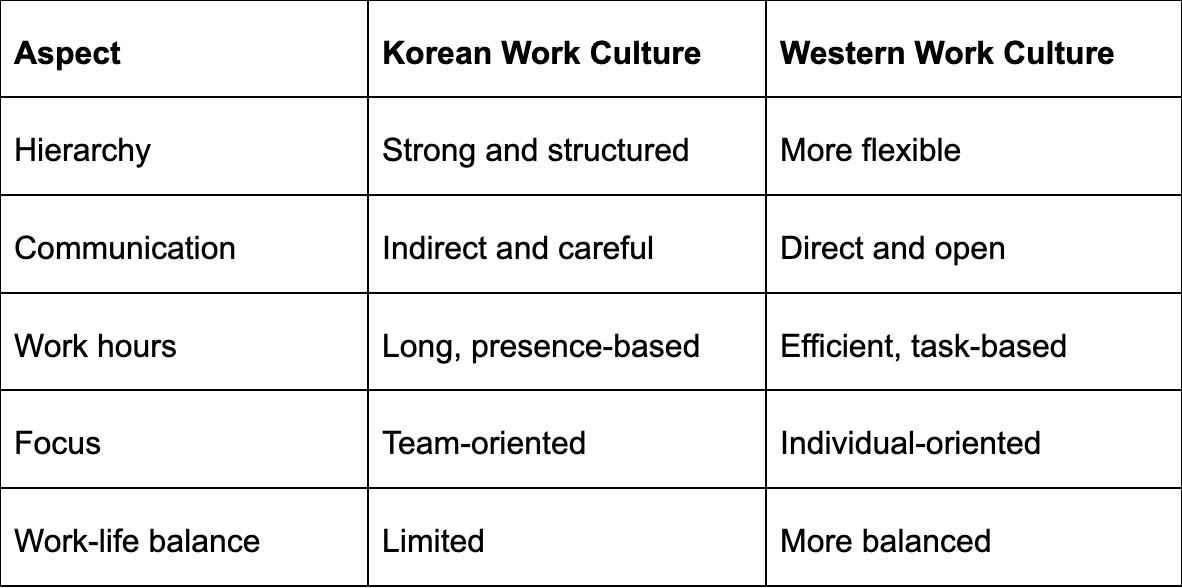
Work culture in Korea and Western countries has differences in structure, expectations, and the way people act on a daily basis. While both are seeking productivity and success, the manner in which people work, the way they communicate, and the way they interact in the workplace are signs of cultural differences. Korean work culture tends to prioritize hierarchy, group harmony, and long working hours, while the Western work culture tends to value independence, efficiency, and work-life balance more.
Structure and Hierarchy
The Korean workplace has a rigid hierarchy. Age and position mean power, and the employees are expected to respect these systems. Decisions tend to be made from above, and junior employees generally take orders from above and do not question them.
In Western workplaces, there is a hierarchy, but hierarchy is not as strict. Employees can speak better with managers and share ideas that are not a huge deal that sees rank. This allows for a more open atmosphere where communication is a two-way street.
Communication Style
Communication among Korean work cultures tends to be indirect. Employees usually don't confront disagreement openly, especially with their senior employees. They are careful in the choice of words to avoid conflicts and ensure respect.
Western work culture has a culture of direct communication. Employees say what is on their minds, even when they disagree. This approach is not about harmony at all times but is concerned with clarity and efficiency.
Work Hours and Expectations
The Korean Workplace Customs Long working hours are common in Korean workplaces. Staying late can demonstrate dedication and commitment, even if the work has been completed. Team presence often can be as important as individual output.
In Western countries, efficiency is more important than the time it takes to do it. Employees concentrate on getting things done rather than staying longer hours. So this is generally accepted, and it does not indicate a lack of commitment to leave on time.
Team vs Individual Focus
Korean work culture is team-oriented. Employees are focused on group success rather than on personal recognition. Decisions are often taken on how they are affecting the team and not necessarily the individual.
Western work culture places more emphasis on the performance of the individual. Employees are recognized for individual achievements, and independence is endorsed.
Work-Life Balance
Work-life balance in Korea used to be limited, with work being a priority. Social gatherings post-work, such as team dinners, are also part of work culture.
Western cultures show greater importance to personal time. Employees have a better separation of work and personal life and place value on time away from work.
Differences
What This Means in Practice
These differences influence the way people deal with one another at work. A Korean workplace may seem more formal and structured, whereas a Western workplace may seem more relaxed and open.
Understanding both styles is important to you for better adaptation in international environments. Primarily, it enables you to modify your communication, expectations, and behavior depending on the workplace culture.